 อาจารย์สามิตร โกยม
ป้อนรายการที่นี่...

Full-Stack Web Application with Next.js 16 and Prisma
รายละเอียด Course ID: wdc-114
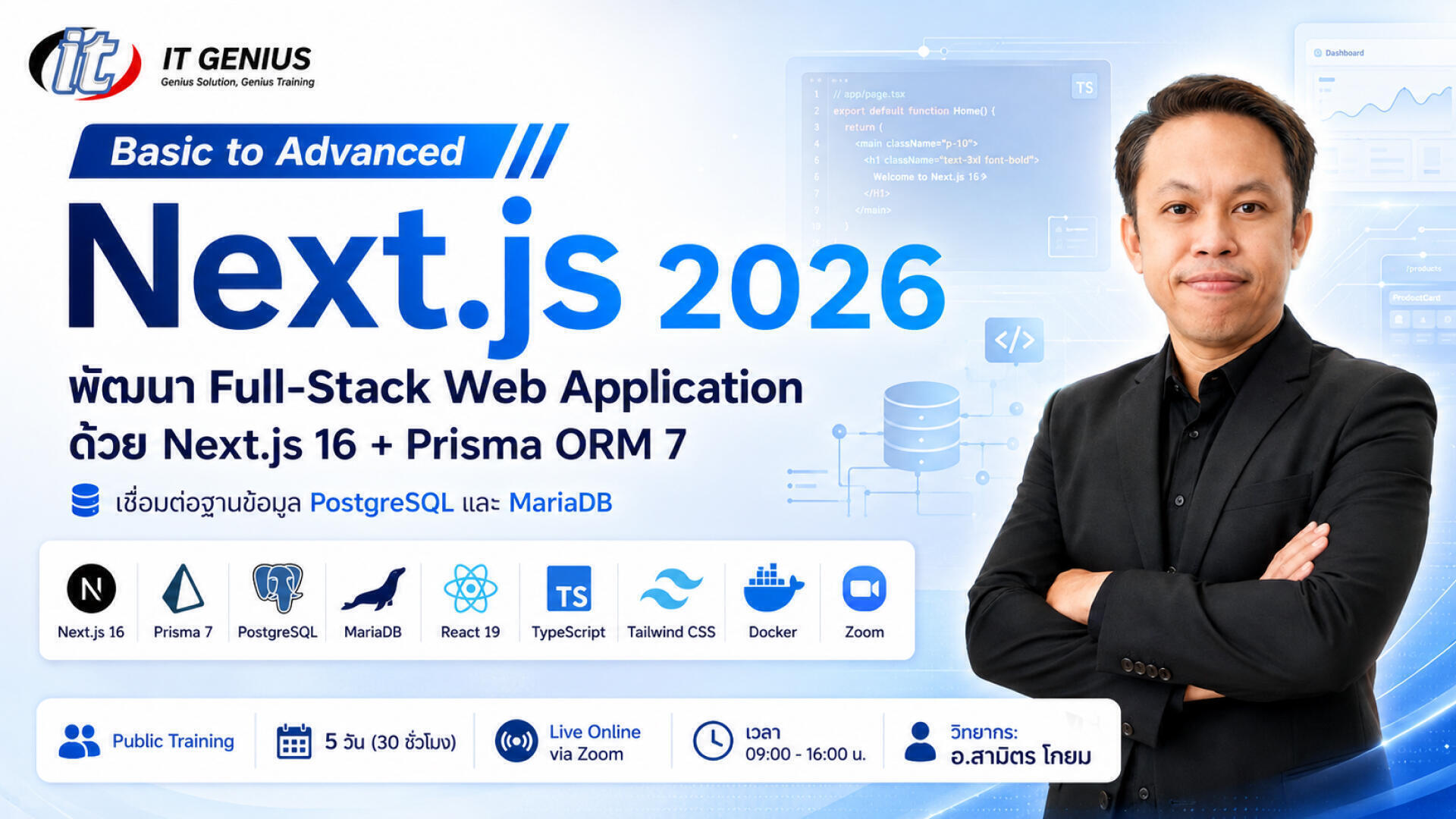
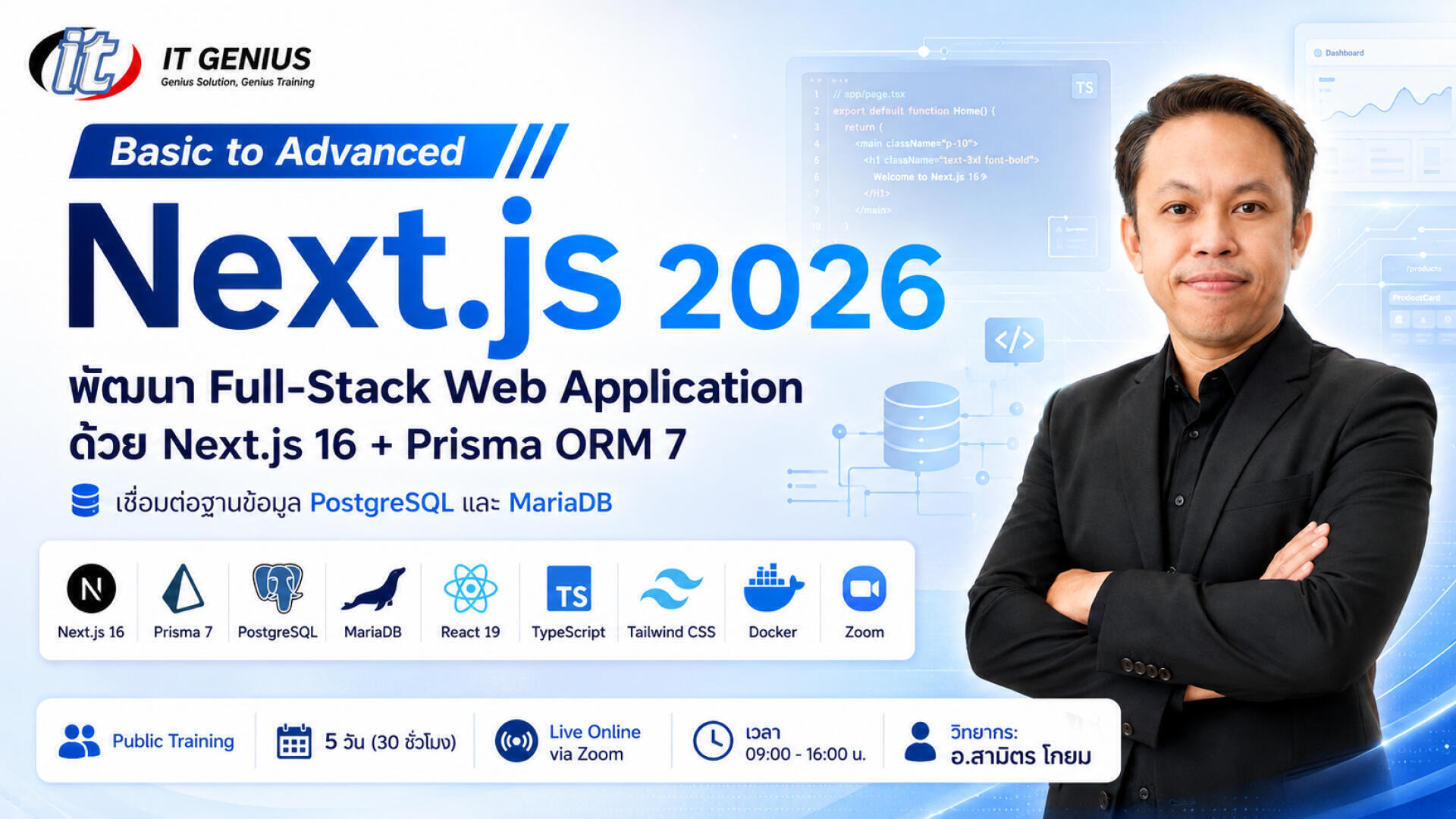
Next.js ได้กลายเป็นเฟรมเวิร์กมาตรฐานของการพัฒนาเว็บแอปพลิเคชันด้วย React ในระดับองค์กร และในปี 2026 นี้ Next.js ได้ก้าวเข้าสู่เวอร์ชัน 16 ซึ่งเป็นการเปลี่ยนแปลงครั้งใหญ่ที่สุดนับตั้งแต่การมาของ App Router ไม่ว่าจะเป็นการที่ Turbopack กลายเป็น Bundler มาตรฐานทั้งตอน Development และ Build การมาของ Cache Components ที่พลิกโมเดลการแคชทั้งหมดให้ชัดเจนและควบคุมได้ การเปลี่ยนจาก middleware.ts มาเป็น proxy.ts รวมถึงการปรับ Request API ทั้งหมดให้เป็น Asynchronous ในขณะเดียวกันฝั่งการจัดการฐานข้อมูล Prisma ORM ก็เข้าสู่เวอร์ชัน 7 ที่ยกเลิก Rust Query Engine เปลี่ยนมาใช้ Query Compiler แบบ WebAssembly กำหนดให้ต้องใช้ Driver Adapter เสมอ และย้ายการตั้งค่าออกมาไว้ที่ prisma.config.ts หลักสูตรนี้ออกแบบสำหรับนักพัฒนาที่มีพื้นฐาน React มาแล้วแต่ยังไม่เคยใช้ Next.js โดยปูพื้นฐาน App Router และ React Server Components ให้แน่นในวันแรก จากนั้นเจาะลึกหัวใจของหลักสูตรคือการออกแบบและพัฒนา API Layer ที่เชื่อมต่อฐานข้อมูลด้วย Prisma ทั้ง Route Handlers, Server Actions, Schema Design, Migration, Transaction, การปรับจูนประสิทธิภาพ และการเปรียบเทียบการทำงานจริงระหว่าง PostgreSQL และ MariaDB ปิดท้ายด้วยเนื้อหาระดับ Production ทั้ง Authentication และ RBAC, Testing ด้วย Vitest และ Playwright, Cache Components และ Partial Prerendering ไปจนถึงการ Deploy ด้วย Docker และ CI/CD และจบด้วย Capstone Project ที่สร้างระบบงานจริงตั้งแต่ต้นจนจบ
รอบการเปิดอบรม
ไฟล์รายละเอียดคอร์ส
- Full-Stack Web Application with Next.js 16 and Prisma (Course outline PDF)
- โปรไฟล์ของบริษัทไอทีจีเนียส เอ็นจิเนียริ่ง (โปรไฟล์ไอทีจีเนียส PDF)
วัตถุประสงค์
- เข้าใจสถาปัตยกรรมของ Next.js 16 ความแตกต่างระหว่าง App Router กับ Pages Router และแนวคิด React Server Components, Client Components และ Streaming
- ออกแบบระบบ Routing, Layout, Loading State และ Error Handling ด้วย App Router ได้
- สร้าง API Layer ด้วย Route Handlers และ Server Actions ได้อย่างถูกต้องและปลอดภัย
- ออกแบบ Database Schema ด้วย Prisma Schema Language และใช้ Prisma ORM 7 ร่วมกับ Driver Adapter สำหรับ PostgreSQL และ MariaDB ได้
- บริหารจัดการโครงสร้างฐานข้อมูลด้วย Prisma Migrate ตลอดวงจร Development และ Production และเขียน Query ที่ซับซ้อนทั้ง Relation, Aggregation, Transaction และ Raw SQL ได้
- เข้าใจความแตกต่างเชิงปฏิบัติระหว่าง PostgreSQL และ MariaDB เมื่อใช้ผ่าน Prisma พร้อมข้อควรระวัง และปรับจูนประสิทธิภาพ แก้ปัญหา N+1 และจัดการ Connection Pool ได้
- พัฒนาระบบ Authentication และ Authorization แบบ RBAC ที่ปลอดภัย และเขียน Test ครอบคลุมทั้ง Unit, Integration และ E2E ด้วย Vitest และ Playwright
- ใช้งานระบบแคชของ Next.js 16 ทั้ง Cache Components, use cache, cacheTag และ Partial Prerendering และ Deploy แบบ Self-hosted ด้วย Docker พร้อมวางกระบวนการ CI/CD
- นำความรู้ทั้งหมดมาประกอบเป็นระบบงานจริงได้ครบวงจรผ่าน Capstone Project
กลุ่มเป้าหมาย
- นักพัฒนา Frontend ที่มีพื้นฐาน React และต้องการก้าวสู่การพัฒนาแบบ Full-Stack
- นักพัฒนา Full-Stack ที่ต้องการอัปเดตความรู้ Next.js ให้ทันเวอร์ชัน 16 และ Prisma 7
- นักพัฒนา Backend ที่ต้องการเข้าใจการออกแบบ API Layer บน Next.js
- Technical Lead และ Solution Architect ที่ต้องการวางมาตรฐานโครงสร้างโปรเจกต์ Next.js ในองค์กร
- นักศึกษาและผู้สนใจที่มีพื้นฐาน React และต้องการพัฒนาเว็บแอปพลิเคชันระดับ Production
ความรู้พื้นฐาน
- มีพื้นฐานการพัฒนาด้วย React (Component, Props, State, Hooks) มาก่อน (สำคัญ)
- มีพื้นฐาน JavaScript สมัยใหม่ (ES2020+) ได้แก่ async/await, Destructuring, Module และ Array Method และ TypeScript ระดับใช้งานได้ (Type, Interface, Generic เบื้องต้น)
- เข้าใจการทำงานของ HTTP, REST API, JSON และฐานข้อมูลเชิงสัมพันธ์กับคำสั่ง SQL เบื้องต้น (SELECT, INSERT, UPDATE, DELETE, JOIN)
- ใช้งาน Command Line, Git และ npm/pnpm เบื้องต้นได้ (เคยใช้ Docker จะช่วยให้เรียนวันที่ 5 ราบรื่นขึ้น แต่ไม่บังคับ)
ระยะเวลาในการอบรม
- 30 ชั่วโมง
ราคาคอร์สอบรม
- ราคาปกติ 9,500 บาท / คน
- โปรโมชั่นลด 10% เหลือ 8,550 บาท / คน
- ราคาเหมาจ่าย (ผู้อบรมตั้งแต่ 10 คน) ตามแต่ตกลงกัน
- ขอใบเสนอราคา
วิทยากรผู้สอน
เนื้อหาการอบรม
Day 1: ปูพื้นฐาน Next.js 16, App Router และ React Server Components
Section 1: ทำความรู้จัก Next.js และภาพรวมเวอร์ชัน 16
- Next.js คืออะไร แก้ปัญหาอะไรให้นักพัฒนา React และความแตกต่างระหว่าง CSR, SSR, SSG, ISR และ Streaming SSR
- พัฒนาการจาก Pages Router สู่ App Router และสิ่งใหม่สำคัญใน v16: Turbopack เป็นค่ามาตรฐาน, Cache Components, proxy.ts, Async Request APIs
- ข้อกำหนดของระบบ และสิ่งที่ถูกถอดออกใน Next.js 16 (AMP, next lint, serverRuntimeConfig, Sync Params) พร้อมผลกระทบต่อโปรเจกต์เดิม
Section 2: สร้างโปรเจกต์และทำความเข้าใจโครงสร้าง
- สร้างโปรเจกต์ด้วย create-next-app โครงสร้างไดเรกทอรีมาตรฐาน และการตั้งค่า TypeScript, Path Alias และ ESLint Flat Config
- Turbopack ความเร็วที่เปลี่ยนไป และการใช้งาน Next.js DevTools
- Workshop: สร้างโปรเจกต์ nextjs-training ที่จะใช้พัฒนาต่อเนื่องตลอดหลักสูตร
Section 3: ระบบ Routing ของ App Router
- File-system Routing และไฟล์พิเศษ page.tsx, layout.tsx, template.tsx พร้อม Nested Routes และ Dynamic Routes
- params และ searchParams เป็น Promise แล้วใน Next.js 16 (ต้อง await), Route Groups และ Private Folders
- Parallel Routes, Intercepting Routes และการนำทางด้วย Link, useRouter, redirect() และ notFound()
Section 4: React Server Components และ Client Components
- แนวคิด RSC และเหตุผลที่เปลี่ยนวิธีคิด Server Component เป็นค่ามาตรฐาน ประโยชน์ด้าน Bundle Size และความปลอดภัย
- เมื่อไรควรใช้ use client, ขอบเขต Component Boundary และรูปแบบส่ง Server Component เป็น children เข้า Client Component
- ข้อจำกัดที่ต้องรู้ และการใช้ server-only กับ client-only เพื่อป้องกันโค้ดหลุดผิดฝั่ง
Section 5: Loading, Error, Streaming และ Metadata
- loading.tsx, Suspense สำหรับ Streaming ระดับ Component และ error.tsx, global-error.tsx, not-found.tsx
- Static และ Dynamic Metadata API เพื่อ SEO พร้อมการจัดการ Font และรูปภาพด้วย next/font และ next/image
- Workshop: สร้างโครงสร้างหน้าเว็บพร้อม Layout, Loading, Error และ Metadata ครบทุกชั้น
Day 2: Data Fetching, Route Handlers, Server Actions และก้าวแรกกับ Prisma + PostgreSQL
Section 6: การดึงข้อมูล (Data Fetching) ใน App Router
- Fetch ข้อมูลใน Server Component ด้วย async/await และพฤติกรรมของ fetch ใน v16 กับการเปลี่ยนค่ามาตรฐานเรื่องแคช
- Request Memoization ด้วย React.cache() และรูปแบบ Sequential vs Parallel Data Fetching
- การดึงข้อมูลฝั่ง Client เมื่อจำเป็น และการเลือกใช้ SWR หรือ TanStack Query
Section 7: Route Handlers - สร้าง REST API ใน Next.js
- ไฟล์ route.ts และการ Export ตาม HTTP Method พร้อม NextRequest และ NextResponse
- การอ่าน Query String, Path Params (เป็น Promise แล้ว), Request Body, Header, Cookie และ Route Segment Config
- Runtime Node.js กับ Edge, การทำ Streaming Response และแนวปฏิบัติที่ถูกต้อง
Section 8: Server Actions และการเขียนข้อมูล
- แนวคิด Server Actions และ use server การใช้กับ form แบบ Progressive Enhancement พร้อม useActionState, useFormStatus, useOptimistic
- การทำ Revalidation ด้วย revalidatePath และ revalidateTag
- ความปลอดภัย: Server Action เป็น Endpoint สาธารณะ ต้องตรวจสิทธิ์ภายในทุกครั้ง และเปรียบเทียบว่าเมื่อไรควรใช้ Server Action หรือ Route Handler
Section 9: รู้จัก Prisma ORM 7 และการเปลี่ยนแปลงครั้งใหญ่
- องค์ประกอบของ Prisma และสิ่งที่เปลี่ยนใน Prisma 7: ยกเลิก Rust Engine เปลี่ยนมาใช้ Query Compiler แบบ WebAssembly
- Generator ตัวใหม่ prisma-client และ Driver Adapter ที่เป็นข้อบังคับแล้ว (เรียก new PrismaClient() เปล่าไม่ได้อีก)
- ไฟล์ prisma.config.ts การย้าย url ออกจาก schema.prisma และข้อกำหนดใหม่ Node.js 20.19+, TypeScript 5.4+
Section 10: ติดตั้ง PostgreSQL และเชื่อมต่อ Prisma ครั้งแรก
- เตรียม PostgreSQL 17 ด้วย Docker Compose ติดตั้ง Prisma และ @prisma/adapter-pg และตั้งค่า prisma.config.ts ให้ถูกต้อง
- รูปแบบ Singleton PrismaClient สำหรับ Next.js และการตั้งค่า postinstall: prisma generate
- Workshop: เชื่อมต่อโปรเจกต์เข้ากับ PostgreSQL สร้างตารางแรก และทำ CRUD API ครบชุดด้วย Route Handlers และ Server Actions
Day 3: Prisma เชิงลึก - Schema Design, Migration, Query, Transaction และเปรียบเทียบ MariaDB
Section 11: ออกแบบ Schema ด้วย Prisma Schema Language
- โครงสร้าง schema.prisma แบบ Multi-file, Scalar Type และ Attribute ที่ใช้บ่อย (@id, @unique, @default, @@index)
- ฟังก์ชันค่าเริ่มต้น autoincrement(), uuid(7), cuid(2), ulid() พร้อมข้อควรรู้ว่า uuid()/cuid() ทำงานฝั่ง Client เท่านั้น
- Native Type ของ PostgreSQL (@db.Uuid, @db.JsonB, @db.Timestamptz) และการออกแบบ Index ให้เหมาะกับการ Query
Section 12: ความสัมพันธ์ระหว่างตาราง (Relations)
- One-to-One, One-to-Many, Many-to-Many (Implicit และ Explicit Join Table) และ Self-relation
- onDelete และ onUpdate (Cascade, Restrict, SetNull), Composite Key และ relationMode (foreignKeys กับ prisma)
- Workshop: ออกแบบ Schema ระบบงานตัวอย่าง (User, Role, Product, Category, Order, OrderItem, Payment) แบบครบวงจร
Section 13: Prisma Migrate ตลอดวงจรการพัฒนา
- ความแตกต่างระหว่าง migrate dev, migrate deploy, db push และ Shadow Database
- การจัดการ Drift (migrate status, resolve, diff), การทำ Baselining และ Seed Data ด้วย prisma db seed
- Error Code ที่พบบ่อย (P3005, P3006, P3009, P3014, P3018) และแนวทาง Migration บน Production อย่างปลอดภัย
Section 14: Prisma Client Query เชิงลึก
- CRUD ครบชุดและ Batch Operations, Filtering ขั้นสูง (AND, OR, NOT, in, contains, mode: insensitive)
- การโหลดข้อมูลสัมพันธ์ (include, select, Nested Write), Pagination (Offset กับ Cursor) และ Aggregation (count, groupBy, _sum)
- JSON Field, Full-Text Search, Raw Query ($queryRaw, $executeRaw) การป้องกัน SQL Injection และ TypedSQL (Preview)
Section 15: Transaction, Performance และ Connection Pool
- Sequential กับ Interactive Transaction, ตัวเลือก maxWait, timeout, Isolation Level และการจัดการ Write Conflict (P2034)
- ปัญหา N+1 บน Prisma และวิธีตรวจจับ, relationLoadStrategy (Preview) และการเปิด Query Logging ดู SQL จริง
- Connection Pool ใน Prisma 7 (ตั้งที่ Driver Adapter), PgBouncer/Supavisor และ Prisma Client Extensions แทน $use
Section 16: MariaDB กับ Prisma - การใช้งานจริงและข้อควรระวัง
- MariaDB ใช้ Provider mysql เดียวกับ MySQL การติดตั้ง @prisma/adapter-mariadb และตารางเปรียบเทียบ Type Mapping กับ PostgreSQL
- ฟีเจอร์ที่ใช้ไม่ได้บน MariaDB (Scalar List, multiSchema, mode: insensitive, createManyAndReturn) และที่ได้เปรียบ (Full-Text Index)
- ข้อควรระวังสำคัญ: ปัญหาเปิดค้างของ Prisma 7 กับ MariaDB เรื่อง JSON, Migration Drift, Timezone และ Collation พร้อม Workshop ย้าย Schema มารันบน MariaDB
Day 4: API ระดับ Production - Validation, Security, Authentication, RBAC และ Testing
Section 17: Validation และ Error Handling อย่างเป็นระบบ
- ใช้ Zod ตรวจสอบข้อมูลขาเข้าทั้ง Route Handler และ Server Action พร้อม Schema ที่ใช้ร่วมกันได้ระหว่าง Client Form และ Server
- การออกแบบรูปแบบ Response ของ API ให้เป็นมาตรฐาน และการจัดการ Error ของ Prisma (P2002, P2003, P2025)
- Centralized Error Handler, การเก็บ Log และ instrumentation.ts กับ onRequestError
Section 18: Data Access Layer และความปลอดภัยของข้อมูล
- แนวคิด Data Access Layer (DAL) การแยก Business Logic ออกจาก Route และรูปแบบ DTO ควบคุมข้อมูลที่ส่งออก
- การใช้ server-only ป้องกัน Secret รั่ว และการจัดการ Environment Variable อย่างปลอดภัย
- ช่องโหว่ที่พบบ่อยและวิธีป้องกัน: Mass Assignment, IDOR และการเปิดเผยข้อมูลเกินจำเป็น
Section 19: Authentication ด้วย Better Auth
- ภาพรวม Authentication แบบ Session และ Token การติดตั้งและตั้งค่า Better Auth พร้อมเชื่อม Prisma Adapter
- Email & Password, Social Provider (Google, GitHub), Plugin nextCookies() และการอ่าน Session ด้วย auth.api.getSession()
- การตั้งค่า Cookie ให้ปลอดภัย, Rate Limiting และ Plugin ที่ใช้บ่อย (2FA, Passkey, Magic Link)
Section 20: Authorization และ Role-Based Access Control (RBAC)
- ออกแบบ Schema สำหรับ Role และ Permission ด้วย Prisma และ Access Control API ของ Better Auth
- proxy.ts แทน middleware.ts ใน Next.js 16 และการทำ Route Protection (ทำงานบน Node.js Runtime เท่านั้น)
- Workshop: เพิ่มระบบ Login และ RBAC 3 ระดับ (Admin, Staff, Customer) เข้ากับระบบงานตัวอย่าง
Section 21: File Upload และงานเบื้องหลัง
- การรับไฟล์อัปโหลดผ่าน Server Action และ Route Handler การตรวจชนิด/ขนาดไฟล์ และเก็บ Metadata ลงฐานข้อมูล
- แนวทางเก็บไฟล์: Local Storage, S3-compatible Storage และ Presigned URL
- การใช้ after() ทำงานเบื้องหลังหลังส่ง Response และแนวทาง Background Job กับ Scheduled Task
Section 22: Testing - Vitest และ Playwright
- กลยุทธ์การทดสอบ (Testing Pyramid) การตั้งค่า Vitest กับ Next.js, Unit Test และ Component Test ด้วย Testing Library
- Integration Test สำหรับ API ที่ต่อฐานข้อมูลจริง การใช้ Test Database และการ Mock Prisma Client (และเมื่อไรที่ไม่ควร Mock)
- E2E Test ด้วย Playwright การจัดการ Authentication State และการรัน Test อัตโนมัติในกระบวนการ CI
Day 5: Caching, Performance, Deployment, CI/CD และ Capstone Project
Section 23: ระบบแคชของ Next.js 16 และ Cache Components
- ภาพรวมชั้นแคชและ Cache Components (cacheComponents: true) แนวคิด Dynamic by Default และคำสั่ง use cache
- use cache: private/remote, การกำหนดอายุด้วย cacheLife, Tag ด้วย cacheTag และการล้างแคช revalidateTag, updateTag, refresh
- ข้อจำกัดภายใน use cache และรูปแบบลดภาระฐานข้อมูลด้วยการแคชผลลัพธ์ Query ของ Prisma
Section 24: Partial Prerendering และ Performance Optimization
- แนวคิด Partial Prerendering (PPR), Partial Prefetching และ Instant Navigations ใน v16.3
- การวิเคราะห์ Bundle Size, Dynamic Import, Code Splitting, การปรับแต่งรูปภาพ และ React Compiler
- การวัดผลด้วย Core Web Vitals และ Lighthouse และการปรับจูนฝั่งฐานข้อมูลด้วย EXPLAIN และ Index
Section 25: Deployment แบบ Self-hosted ด้วย Docker
- output: standalone และ Dockerfile แบบ Multi-stage การจัดการ Environment Variable ให้ใช้ Image เดียวได้หลายสภาพแวดล้อม
- การรัน prisma migrate deploy อย่างปลอดภัย, Docker Compose ครบชุด (Next.js + PostgreSQL + Reverse Proxy) และ Nginx
- การ Deploy หลาย Instance, Custom Cache Handler ด้วย Redis และภาพรวม Adapter API กับ Vercel
Section 26: CI/CD และการดูแลระบบหลัง Deploy
- ออกแบบ Pipeline ด้วย GitHub Actions: Lint, Type Check, Test, Build, Deploy และการจัดการ Migration ใน Pipeline
- การจัดการ Secret, Health Check, Graceful Shutdown และแนวทาง Monitoring กับการเก็บ Log ระดับ Production
- การวางแผนอัปเกรดเวอร์ชัน Next.js และ Prisma อย่างมีระบบพร้อมการใช้ Codemod
Section 27: Capstone Project
- โจทย์: พัฒนาระบบจัดการสินค้าและคำสั่งซื้อ (Product & Order Management) ให้สมบูรณ์ตั้งแต่ออกแบบ Schema ทำ Migration พัฒนา REST API พร้อม Validation
- พัฒนาส่วนติดต่อผู้ใช้ด้วย Server Components และ Server Actions ใส่ Authentication และ RBAC ครบทุกชั้น และเพิ่มการแคชด้วย use cache
- เขียน Test ครอบคลุม Unit, Integration และ E2E สร้าง Dockerfile Deploy ขึ้น Environment ทดสอบ แล้วนำเสนอผลงานและรีวิวโค้ดร่วมกัน
Section 28: สรุปและแนวทางต่อยอด
- สรุปภาพรวมสถาปัตยกรรมตลอด 5 วัน และ Checklist ก่อนนำระบบขึ้น Production
- แนวทางต่อยอด: Monorepo (Turborepo), tRPC, GraphQL, Microservices และฝั่งฐานข้อมูล Read Replica, Sharding, Redis
- การติดตามความเปลี่ยนแปลงของ Next.js และ Prisma พร้อมถาม-ตอบและคำแนะนำเฉพาะรายโปรเจกต์
แนะนำหลักสูตรที่น่าสนใจ

คำถามที่พบบ่อย (FAQ)
คอร์ส Full-Stack Web Application with Next.js 16 and Prisma เหมาะกับใคร ต้องมีพื้นฐานอะไรมาก่อน
ดูรายละเอียดกลุ่มเป้าหมายและพื้นฐานที่ต้องมีได้ในหัวข้อ "กลุ่มเป้าหมาย" และ "พื้นฐานที่ผู้เรียนต้องมี" บนหน้านี้ หากไม่แน่ใจว่าพื้นฐานพอหรือไม่ ปรึกษาทีมงานได้ฟรีทาง LINE @itgenius หรือโทร 02-570-8449
คอร์ส Full-Stack Web Application with Next.js 16 and Prisma ราคาเท่าไร ใช้เวลาเรียนกี่ชั่วโมง
ราคาปกติ 9,500 บาท (โปรโมชันปัจจุบันเหลือ 8,550 บาท) ใช้เวลาอบรม 30 ชั่วโมง ราคานี้รวมเอกสารประกอบการอบรม อาหารกลางวัน และอาหารว่างตลอดหลักสูตร
เรียนจบได้รับ Certificate หรือไม่
ได้รับ ผู้ผ่านการอบรมทุกท่านจะได้รับใบประกาศนียบัตร (Certificate of Completion) จากสถาบันไอทีจีเนียส
อบรมที่ไหน มีเรียนแบบออนไลน์หรือไม่
อบรมแบบ Onsite ที่สถาบันไอทีจีเนียส สาขาลาดพร้าววังหิน 68 กรุงเทพฯ และมีบริการจัดอบรมนอกสถานที่ (In-house Training) สำหรับองค์กร บางหลักสูตรมีเวอร์ชันเรียนออนไลน์ผ่าน GeniusHub ดูได้ที่เมนูคอร์สออนไลน์
ถ้าเรียนไม่ทันหรือขาดเรียน มีเรียนซ้ำ/เรียนชดเชยหรือไม่
มี ผู้เรียนสามารถแจ้งขอเรียนซ้ำ (repeat) ในรอบถัดไปของหลักสูตรเดียวกันได้ฟรีตามเงื่อนไขของสถาบัน ดูรายละเอียดที่หน้า "เรียนซ้ำฟรี" หรือสอบถามทีมงาน
สมัครเรียนหรือขอใบเสนอราคาในนามบริษัทได้อย่างไร
สมัครออนไลน์ได้จากแบบฟอร์มลงทะเบียนบนหน้านี้ หรือขอใบเสนอราคา (Quotation) ในนามนิติบุคคลได้ทันทีจากปุ่ม "ขอใบเสนอราคา" สอบถามเพิ่มเติมโทร 02-570-8449 หรือ LINE @itgenius